


Warrior Cut: Meaning, Styles, History, and Styling Guide
The warrior cut has become a distinctive choice in modern men’s grooming, combining rugged texture, natural movement, and a confident silhouette. Inspired by the relaxed hairstyles associated with the 1990s, this haircut offers an alternative to highly polished fades and carefully sculpted hairstyles. Its appeal lies in the balance between structure and spontaneity: the sides look controlled, while the upper sections retain movement, separation, and a deliberately undone finish.
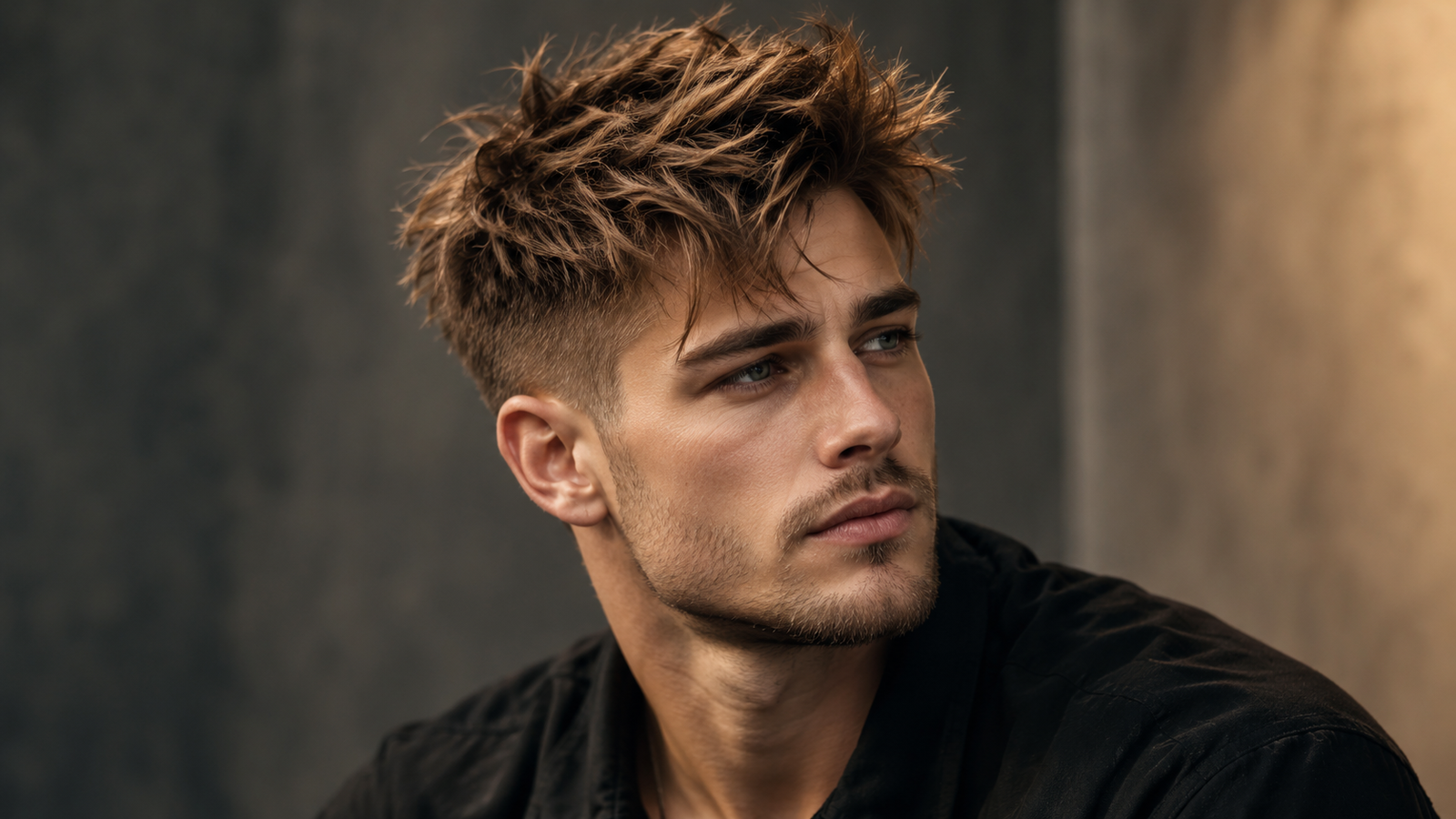
Although the name suggests a dramatic, battle-inspired appearance, the modern warrior cut is generally more understated than its title implies. It is often associated with textured layers, softly tapered sides, a slightly irregular fringe, and a finish that looks natural rather than meticulously arranged. Depending on the wearer’s hair type, face shape, and personal preferences, the same basic idea can be adapted into a shorter crop, a longer layered style, or a more pronounced, rebellious look.
The haircut has attracted renewed attention through contemporary grooming culture and renewed interest in 1990s fashion. Brad Pitt’s appearance as Tyler Durden in the 1999 film Fight Club is a particularly recognizable reference for the messy, textured aesthetic associated with the trend. Modern interpretations can also be softer, more versatile, and easier to incorporate into everyday professional and casual settings.
Understanding the warrior cut involves more than recognizing its appearance. Hair texture, cutting techniques, proportions, styling products, and maintenance routines all influence the final result. This guide explores its defining characteristics, historical influences, popular variations, suitability for different hair types, and practical techniques for achieving a personalized version of the style.
Warrior Cut at a Glance
| Feature | Details |
|---|---|
| Hairstyle category | Textured men’s haircut |
| Overall appearance | Rugged, relaxed, layered, and slightly messy |
| Top section | Usually short to medium length with visible texture |
| Sides | Tapered, faded, or kept relatively short |
| Fringe | Optional, often irregular or naturally forward |
| Styling finish | Matte, touchable, and lightly structured |
| Suitable hair types | Straight, wavy, and some curly textures |
| Maintenance | Moderate, depending on length and shape |
| Common inspiration | 1990s textured hairstyles and cinematic grooming |
| Best styling approach | Enhance natural movement rather than create rigid shapes |
The table describes the most recognizable modern interpretation rather than a universally standardized haircut. The exact length, side treatment, and overall silhouette can vary considerably between barbers and individual preferences.
What Is a Warrior Cut?
A warrior cut is a textured hairstyle built around contrast, movement, and an intentionally relaxed finish. In its popular contemporary form, the hair on top is left long enough to create separation between individual strands, while the sides and back are shortened to establish a clear outline. The upper hair may be swept forward, lifted slightly, pushed to one side, or allowed to fall naturally.
Unlike a conventional business haircut, which often emphasizes smooth transitions and precise styling, this look benefits from irregular texture. The ends are not necessarily arranged into uniform lines, and the finished hairstyle should not appear excessively stiff or glossy. Its defining quality is controlled imperfection: the hair has a deliberate shape, but it retains the appearance of natural movement.
The term does not refer to one fixed technical formula. One barber might create the look with scissors and a soft taper, while another might use clippers to establish greater contrast between the top and sides. Both approaches can work when the proportions and texture reflect the intended style.
A successful warrior cut therefore depends on the relationship between its individual elements. The top must have enough length to move, the sides must complement the head shape, and the overall finish should appear textured without becoming shapeless.
The Origins and Cultural Influence of the Style
Connections to 1990s Hairstyles
The modern warrior cut draws much of its visual identity from hairstyles that became popular during the 1990s. Fashion during that decade frequently embraced relaxed silhouettes, grunge influences, alternative music culture, and an aesthetic that resisted excessive polish.
Men’s hairstyles reflected these wider changes. Layered cuts, textured crops, uneven fringes, and casually styled hair became recognizable alternatives to more formal grooming conventions. Rather than making every strand look perfectly arranged, these hairstyles emphasized individuality and movement.
The warrior cut revisits that visual language with contemporary barbering techniques. Modern fades, controlled tapering, and more deliberate layering can give the traditional messy appearance a cleaner outline without removing its relaxed character.
It is more accurate to understand the style as a modern interpretation of earlier textured haircuts than as a completely new invention. Its current name provides a recognizable label for a combination of established cutting techniques and a particular aesthetic.
The Influence of Fight Club
The 1999 film Fight Club, directed by David Fincher, remains an important cultural reference for the contemporary warrior cut. Brad Pitt’s portrayal of Tyler Durden featured short sides and an uneven, textured top that appeared casual, rebellious, and deliberately unpolished.
The hairstyle complemented the character’s wardrobe and visual identity. Its roughness contrasted with conventional, neatly arranged grooming, helping establish an image associated with nonconformity and a rejection of traditional expectations.
Today’s version does not have to reproduce Pitt’s haircut exactly. Some interpretations retain the compact shape and irregular texture, while others introduce softer tapers, additional length, or more restrained styling. The cinematic reference is best understood as an influence rather than a strict template.
The Modern Return of Textured Grooming
Recent interest in the warrior cut reflects a broader appreciation for hairstyles that look natural without appearing neglected. Many contemporary grooming approaches favor touchable texture, matte finishes, and shapes that can be restyled easily throughout the day.
The warrior cut fits this preference because it can look deliberate without requiring every section of hair to remain in a fixed position. It also offers room for personalization, allowing the wearer to adjust the degree of contrast, length, and texture.
Social media has helped circulate the name and its visual references, although popularity can vary by location, age group, and individual taste. Its enduring appeal rests less on a single trend cycle than on the versatility of its underlying techniques.
Defining Features of a Warrior Cut
Several characteristics distinguish the warrior cut from other short and medium-length men’s hairstyles.
1. A Textured Top
The upper section is the most recognizable part of the style. Hair is layered or point-cut to create variation in length and prevent the surface from appearing too uniform. The result is a collection of separated sections that can be moved in different directions.
The amount of texture depends on hair density and the desired finish. Thick hair may benefit from carefully removing excess weight, while fine hair generally needs a lighter approach that preserves fullness. Too much thinning can make the top appear sparse, so cutting techniques should be selected according to the individual’s hair.
2. Shorter Sides and Back
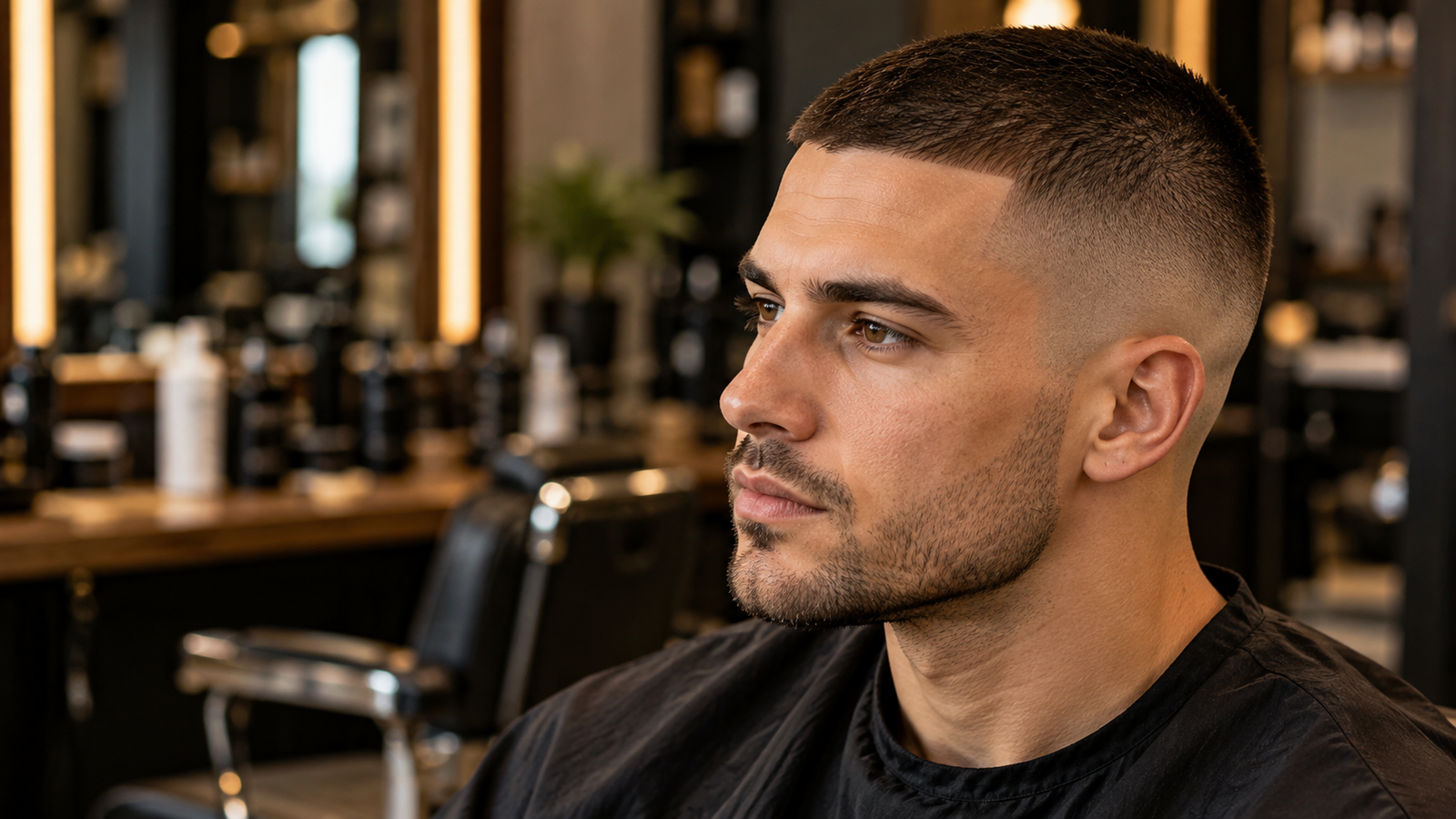
Shorter sides provide definition and allow the textured top to stand out. They may be created with scissors, clippers, a taper, or a fade.
A soft taper produces a subtle, traditional appearance. A low fade offers a slightly sharper outline, while a mid fade creates more visible contrast. A high fade can make the hairstyle considerably more dramatic, although it may move the result away from the softer 1990s-inspired interpretation.
The back can be kept close and tidy or left slightly heavier to create a more relaxed silhouette. The right choice depends on the shape of the head, the length of the top, and the wearer’s preferences.
3. Natural, Irregular Movement
The warrior cut is not intended to look perfectly symmetrical in every detail. Small variations in direction and separation give the hairstyle its characteristic energy.
Some sections may point upward, others may fall forward, and a few may angle sideways. This variation should still follow the haircut’s overall shape. Randomly uneven hair without a suitable underlying cut is unlikely to produce the same effect.
4. A Soft or Broken Fringe
A fringe is common but not essential. When included, it is usually textured rather than cut into a perfectly straight line.
A short, broken fringe creates a compact appearance, whereas a longer fringe can fall toward the forehead or sweep to one side. The choice can influence how the hairstyle frames the face, particularly around the forehead and temples.
5. A Matte Finish
A matte finish preserves the appearance of natural hair and prevents the hairstyle from looking overly slick. Lightweight styling creams, texturizing products, and matte pastes are often more suitable than heavy, high-shine gels.
The objective is not to eliminate all signs of styling. It is to create enough definition for the hair to hold its shape while remaining soft and movable.
Popular Warrior Cut Variations
The following variations adapt the same basic aesthetic to different preferences, hair textures, and grooming routines.

Classic Warrior Cut
The classic version combines a heavily textured top with relatively short sides and a relaxed outline. It is the closest match for someone seeking the recognizable 1990s-inspired appearance. The top should retain enough length to create separation without becoming difficult to control.

Warrior Cut With a Low Taper
This interpretation keeps the area around the ears and neckline neat while preserving a softer transition into the upper hair. It is a practical option for people who want texture without a highly dramatic contrast. It can also suit workplaces where an extremely edgy haircut may feel out of place.

Warrior Cut With a Mid Fade
A mid fade makes the contrast between the top and sides more noticeable. It gives the haircut a sharper outline while allowing the upper section to remain loose and textured. This option works particularly well when the wearer wants a more contemporary barbershop appearance.

Wavy Warrior Cut
Natural waves add movement without requiring as much artificial texture. The barber can preserve the hair’s natural pattern and use layered cutting to prevent excessive bulk. A lightweight cream can help define the waves while keeping them soft.

Curly Warrior Cut
Curls create a fuller, more dimensional appearance on top. The sides can be tapered to balance the volume, but the upper section should retain enough length for the curls to form naturally. The barber should account for shrinkage and the way curls change shape as they dry.

Longer Layered Warrior Cut
A longer interpretation retains additional weight through the back and upper sections. It can have a subtle shag or mullet influence, producing a more expressive silhouette. Because the length changes the balance of the haircut, careful layering is essential.
These names describe useful styling directions rather than official categories. A barber may use different terminology for similar results, which is why reference photographs are helpful during a consultation.
Who Can Wear a Warrior Cut?
The warrior cut can be adapted to many people, but the most flattering version depends on the relationship between hair texture, facial proportions, hair density, and personal styling preferences.
Choosing the Right Version for Your Face Shape
Oval faces: An oval face generally accommodates a wide range of proportions. A textured top with a low or mid taper can preserve natural balance without requiring substantial changes to the silhouette.
Square faces: Strong jawlines often work well with a textured top and softly tapered sides. The result can emphasize existing facial structure without relying on an excessively high fade or rigid styling.
Round faces: A little extra height at the top can create a more elongated visual impression. Keeping the sides relatively controlled may also help balance the overall shape. Excessive volume at the temples can make the face appear wider.
Long faces: A moderate top with a forward fringe or side-swept texture can provide balance. Very tall styling combined with extremely short sides may emphasize facial length, so a softer variation may be preferable.
Heart-shaped faces: A textured fringe and a less aggressive taper can help balance a wider forehead with a narrower chin. The best approach depends on hair density and the desired amount of volume around the temples.
These are general styling considerations, not strict rules. Personal preference, head shape, and the way hair naturally grows can matter as much as conventional face-shape guidance.
Suitability for Different Hair Types
Straight hair can show individual layers clearly, making it suitable for a defined, piecey finish. However, very fine straight hair may require careful layering to prevent the top from losing fullness.
Wavy hair naturally creates variation and movement. It often lends itself to a relaxed warrior cut because the hair already has some of the texture the style requires.
Curly hair can produce a fuller silhouette, although the final shape depends on curl pattern, shrinkage, and density. A skilled barber should consider the hair in its natural state rather than relying exclusively on how it looks when wet.
Thick hair can support pronounced texture, but excessive bulk may need to be removed strategically. Fine hair can also work, provided the cut preserves enough density and avoids unnecessary thinning.
There is no universal hair type requirement. The most important consideration is whether the haircut can be adapted to the person’s natural growth pattern without excessive daily effort.
How to Ask Your Barber for a Warrior Cut
Clear communication is one of the most important steps in getting the desired result. Because the warrior cut is a descriptive name rather than a single standardized technique, two barbers may interpret the request differently.
Start by explaining the overall appearance you want. Mention the degree of texture, the length you want to keep on top, and how short you prefer the sides. If you want a natural 1990s-inspired finish, make it clear that you do not want the top styled into a perfectly smooth or rigid shape.
A useful description might be:
“I want a warrior cut with a heavily textured, slightly messy top, shorter sides, and a natural matte finish. Please keep enough length on top for movement and use a soft taper rather than making the sides excessively sharp. I want the haircut to look relaxed but intentional.”
You can adjust this request according to your preferences. Someone seeking a more dramatic version might ask for a mid fade, while someone who prefers a subtle everyday style might request a low taper.
Important Details to Discuss Before Cutting
- Top length: Explain whether you prefer a short crop or enough length for a more noticeable layered effect.
- Side treatment: Choose between scissors, a taper, or a fade, and specify how much contrast you want.
- Fringe shape: Decide whether the front should fall forward, remain short, or sweep to the side.
- Back length: Clarify whether you want a compact neckline or slightly longer layers.
- Texture: Request separation and movement without excessive thinning.
- Styling finish: Explain that you prefer a matte, natural appearance rather than a wet or glossy look.
Bring one or two reference photographs showing the front and side profiles. Photographs help communicate proportions more accurately than a haircut name alone.
It is also worth asking your barber how the style will behave as it grows out. A good cut should suit your natural hair direction and remain manageable between appointments.
How to Style a Warrior Cut at Home
The warrior cut can be relatively easy to style once the underlying shape has been cut correctly. The aim is to enhance natural movement, not to force every strand into a fixed position.
Step 1: Start With Clean Hair
Wash your hair according to your normal routine, using a shampoo suited to your scalp and hair type. Apply conditioner when needed, particularly if your hair is dry, coarse, or curly.
Gently towel-dry the hair rather than rubbing it aggressively. Excessive friction can increase frizz and make the strands harder to manage.
Step 2: Apply a Lightweight Texturizing Product
If your hair needs additional grip, use a small amount of texturizing spray or another lightweight styling product. Apply it evenly rather than concentrating it in one area.
Sea salt spray can help some hair types develop a rougher texture, but it may leave already dry hair feeling coarse. A lightweight styling cream may be a better alternative for dry, curly, or frizz-prone hair.
The correct product depends on your hair’s natural characteristics. More product does not necessarily create better texture.
Step 3: Dry in the Direction You Want
Allowing the hair to air-dry can work well when the natural texture already provides sufficient movement. For additional lift, use a hair dryer on a moderate setting while guiding the roots with your fingers.
Direct the airflow according to the desired shape. Lifting the front slightly can create volume, while directing the hair forward produces a more compact appearance.
For wavy or curly hair, avoid excessive brushing during drying if it disrupts the natural pattern.
Step 4: Define the Texture
Once the hair is nearly dry, work a small amount of matte paste or clay between your palms. Distribute it through the hair, concentrating on areas that need separation.
Use your fingertips to pinch a few sections, lift the roots, or direct the fringe. Leave other sections relatively untouched so the hairstyle does not look overly uniform.
Start with less product than you think you need. You can always add a little more, whereas removing excess product may require washing or dampening the hair again.
Step 5: Keep the Finish Natural
Avoid repeatedly combing the hair into place if you want the characteristic relaxed appearance. Minor irregularities are part of the style.
A light touch is generally sufficient once the shape is established. If the hair becomes flat during the day, gently repositioning it with your fingers may restore some movement without requiring a complete restyle.
Best Products for Maintaining the Look
Different products produce different effects, and selecting the right one can make the warrior cut easier to manage.
| Product | Main purpose | Best suited to |
|---|---|---|
| Matte clay | Stronger separation and hold | Medium to thick hair |
| Matte paste | Flexible definition | Most straight and wavy hair types |
| Texturizing spray | Adds grip and a less uniform finish | Hair that needs extra movement |
| Lightweight styling cream | Soft control and reduced frizz | Dry, wavy, or curly hair |
| Volumizing mousse | Adds lift without necessarily creating a heavy finish | Fine or flat hair |
| Gentle shampoo | Removes dirt and product residue | Regular cleansing |
| Conditioner | Helps improve softness and manageability | Hair that feels dry or rough |
These products are options, not requirements. Some people can achieve a suitable finish using only a hair dryer and their fingers.
Avoid applying heavy products directly to the roots if they make your hair greasy or cause it to collapse. For a matte hairstyle, a small amount distributed evenly through the appropriate sections is usually more effective than a thick coating.
Maintenance and How Often to Get a Trim
Although the warrior cut often appears casual, its shape still benefits from periodic maintenance. The sides, neckline, and upper layers grow at different rates, so the overall balance can change over time.
People who prefer a particularly neat taper or fade may want a trim approximately every two to four weeks. Those who wear a softer, longer version may be comfortable waiting four to eight weeks, depending on their growth rate and how the haircut develops.
These are general estimates rather than fixed requirements. Some people prefer frequent barber visits, while others enjoy the slightly longer shape that develops between trims.
At home, focus on keeping the hair clean, avoiding excessive heat, and using products that suit your scalp and hair texture. Avoid attempting major changes to the layers or fringe without understanding how they will affect the overall shape.
A useful maintenance strategy is to tell your barber which parts of the previous cut worked well. For example, you might want to preserve the top length while refreshing the sides, or retain the natural back shape while removing some bulk around the temples.
That feedback helps the barber refine the haircut over successive appointments instead of recreating it from scratch.
Advantages and Limitations of a Warrior Cut
Why People Choose It
The warrior cut offers several practical and aesthetic advantages.
First, its textured finish allows some flexibility in daily styling. Because the hairstyle does not rely on perfectly aligned strands, it can remain attractive even when the hair shifts naturally throughout the day.
Second, it can be customized. The top length, side contrast, fringe, and neckline can all be adjusted, making the style suitable for a range of preferences.
Third, it provides a middle ground between a traditional short haircut and a longer layered style. The wearer can retain enough length for movement without committing to a fully long hairstyle.
Finally, its relaxed finish works with many casual outfits and can be adapted to more refined clothing. A softer taper and restrained texture generally create a more understated impression than a high fade and dramatically separated top.
Potential Drawbacks
The style is not entirely maintenance-free. Texture must still be cut into the hair, and some hair types may require daily styling to achieve the desired shape.
Very fine hair may struggle to maintain pronounced separation without suitable cutting and lightweight products. Thick hair can become bulky if the layers are not balanced properly. Curly hair may require a different cutting approach because its shape changes as it dries.
The hairstyle can also be misunderstood during a barber consultation. Asking only for a warrior cut may result in something more closely resembling a standard textured crop, a sharp fade, or a mullet-inspired style than intended.
These limitations are manageable when expectations are realistic and the haircut is tailored to the individual.
Warrior Cut Compared With Similar Hairstyles
The warrior cut shares features with several established hairstyles, but differences in texture, proportions, and finish help distinguish them.
| Hairstyle | Main characteristics | Difference from the warrior cut |
|---|---|---|
| Textured crop | Short top, defined texture, often a forward fringe | Usually more compact and uniform |
| Undercut | Distinct separation between the top and sides | Can have a smoother, longer, or more controlled top |
| Modern mullet | Shorter front and sides with additional length at the back | Places greater emphasis on rear length |
| Wolf cut | Layered, shaggy shape with substantial movement | Usually features more extensive layering throughout |
| Crew cut | Short hair with a clean, practical outline | Generally has less length and less visible texture |
| Classic taper | Gradually shortened sides and back | Can be more conservative and less deliberately messy |
The distinctions are not absolute. A warrior cut can incorporate elements of a taper, undercut, shag, or mullet. What makes it recognizable is the overall combination of textured upper hair, a defined outline, and an intentionally relaxed finish.
Is the Warrior Cut Suitable for Professional Settings?
A warrior cut can work in professional environments when its proportions and styling are appropriate for the setting.
A low taper, moderate top length, and restrained texture create a relatively subtle version. The sides remain neat, while the upper hair provides enough movement to avoid looking overly formal. This variation can suit people who want a contemporary haircut without a dramatic silhouette.
In more conservative workplaces, an extremely high fade, heavily spiked top, or pronounced mullet shape may attract more attention than desired. A softer interpretation offers greater flexibility.
The finish also matters. Clean, conditioned hair with controlled texture can appear polished without losing the relaxed character of the haircut. There is no need to make every strand perfectly uniform.
Ultimately, professional suitability depends on workplace expectations, personal presentation, and the particular version chosen. The name itself does not determine whether a hairstyle is appropriate.
Common Mistakes to Avoid
Several avoidable mistakes can make a warrior cut less effective.
Requesting the style without a reference. The term can mean different things to different barbers. A photograph helps clarify the intended length, texture, and side profile.
Removing too much weight. Excessive thinning can make the top appear weak, uneven, or difficult to style. Texture should be created in proportion to hair density.
Choosing an unsuitable fade. A very high fade can change the overall character of the haircut. Discuss the degree of contrast before cutting begins.
Using too much styling product. Heavy application can flatten the hair, create unwanted shine, and produce a greasy appearance. Start with a small amount and increase it only when necessary.
Ignoring natural growth patterns. Hair that naturally grows forward, sideways, or upward may not respond well to a shape that works against its direction. A suitable cut should account for these patterns.
Expecting the haircut to suit everyone identically. Hair density, curl pattern, head shape, and lifestyle influence the final appearance. A personalized version is usually more successful than copying another person’s haircut exactly.
The Warrior Cut as a Personal Style Choice
The most effective interpretation of the warrior cut is one that reflects the wearer’s own preferences rather than simply reproducing a popular photograph.
Someone who prefers understated grooming might choose a low taper and a relatively short top. Another person might favor pronounced layers, a longer fringe, or extra length through the back. Both approaches can preserve the essential combination of movement, texture, and a relaxed outline.
Clothing and grooming can also influence how the haircut is perceived. With casual clothing, the hairstyle may reinforce a relaxed, youthful appearance. With a tailored jacket or minimalist outfit, the same texture can introduce contrast without overwhelming the overall look.
It is worth considering the time available for daily grooming, too. A hairstyle that looks impressive in a photograph may require more drying, shaping, or product application than expected. The best choice is one that fits comfortably into an ordinary routine.
A thoughtful consultation, realistic expectations, and a willingness to adapt the proportions to individual features can turn the warrior cut from a passing trend into a practical personal hairstyle.
Frequently Asked Questions About the Warrior Cut
1. What is a warrior cut?
A warrior cut is a textured hairstyle commonly characterized by shorter sides, a longer or more layered top, and a relaxed, slightly messy finish. The precise shape varies according to hair type, preferred length, and the barber’s interpretation.
2. Why is the warrior cut popular?
Its appeal comes from its combination of structure and natural movement. The hairstyle offers a less polished alternative to sharply defined grooming trends while remaining adaptable to different face shapes, outfits, and personal preferences. Interest in 1990s-inspired fashion has also contributed to its renewed visibility.
3. Is the warrior cut inspired by Brad Pitt?
Yes, Brad Pitt’s hairstyle as Tyler Durden in the 1999 film Fight Club is a prominent reference for the modern trend. However, the warrior cut is not limited to reproducing that particular look. Contemporary versions often use different lengths, tapers, and styling techniques.
4. How long should the hair be for a warrior cut?
There is no universal minimum or maximum. A short interpretation can work with relatively compact layers, while a more pronounced version needs enough length to create visible separation and movement. Your barber can recommend suitable proportions based on your hair density and the finish you want.
5. Does a warrior cut work with straight hair?
Yes. Straight hair can display the individual layers clearly, making it suitable for a defined, piecey appearance. The barber may need to create additional texture through the cutting technique or use a lightweight styling product to prevent the hair from appearing flat.
6. Can people with curly hair get a warrior cut?
Yes. Curly hair can create a fuller and more dimensional version of the style. The barber should account for shrinkage, curl direction, and natural volume when choosing the top length and shaping the sides.
7. Is the warrior cut suitable for thin hair?
It can work with fine or relatively thin hair, but the cutting technique matters. Preserving density and avoiding excessive thinning can help maintain a fuller appearance. A shorter, carefully textured version may be easier to manage than a heavily layered style.
8. Is the warrior cut the same as a mullet?
No. A mullet typically emphasizes a difference between shorter front and side sections and a longer back. A warrior cut focuses more broadly on textured upper hair and a deliberately relaxed finish. Some longer warrior cuts incorporate mullet-inspired elements.
9. How do I ask my barber for a warrior cut?
Describe the length you want on top, the preferred taper or fade, the fringe shape, and the amount of texture. Explain whether you prefer a subtle or dramatic contrast. Bringing reference photographs is one of the most reliable ways to communicate the intended result.
10. Which products are best for styling a warrior cut?
Matte clay, styling paste, texturizing spray, and lightweight cream are common options. The best choice depends on hair type and the desired level of hold. Fine hair often benefits from lightweight products, while thick hair may need a stronger paste or clay.
11. How often should a warrior cut be trimmed?
A shorter version with a defined fade may need refreshing every two to four weeks. A longer, softer interpretation may retain its shape for four to eight weeks or longer. Growth rate, haircut structure, and personal preference determine the ideal schedule.
12. Is the warrior cut easy to maintain?
It can be relatively easy to style once the haircut is shaped correctly. Many versions need only a small amount of product and a few minutes of finger styling. Hair that is especially thick, fine, curly, or resistant to the desired shape may require additional attention.
13. Can a warrior cut be worn without styling products?
Yes. Hair with suitable natural texture may fall into place with minimal assistance. Air-drying and finger styling can be enough for some people, although a small amount of product may improve definition and hold.
14. Does a warrior cut suit round faces?
It can. A version with moderate height on top and controlled volume at the sides may create a more elongated visual impression. The ideal proportions depend on the person’s features and natural hair growth.
15. Is the warrior cut a timeless hairstyle or a temporary trend?
Its current name and social media visibility may change over time, but the underlying techniques—layering, tapering, and textured styling—have been used for decades. The haircut’s longevity will depend on how well individual versions adapt to changing preferences.
Read more:https://articlebytes.co.uk/cyroket2585-release-date/