


Modern Kitchen Cabinets: Complete Design & Materials Guide
The Architectural Evolution of Modern Kitchen Cabinets: Materials, Aesthetics, and Functional Engineering
The kitchen has undergone a dramatic transformation over the past century, evolving from a strictly utilitarian service room tucked away at the back of a house into the primary social and architectural centerpiece of the contemporary home. At the heart of this transformation is cabinetry. Storage solutions are no longer passive wooden boxes meant merely to conceal cookware; they are sophisticated spatial installations that dictate the visual balance, workflow, and tactile identity of the modern living space.
Understanding modern kitchen cabinets requires examining a fundamental shift in design philosophy. Where classical cabinetry relied heavily on intricate crown moldings, raised panel doors, ornate wood grains, and heavily detailed trim work, modern cabinetry prioritizes clean lines, structural minimalism, continuous surfaces, and uncompromised functional ergonomics. This visual discipline does not imply a lack of richness. Instead, modern kitchen cabinets substitute decorative flourishes with high-grade engineering, innovative surface treatments, integrated lighting, and meticulous architectural alignment.
Whether undertaking a complete residential overhaul or planning a targeted architectural upgrade, selecting modern kitchen cabinets demands a nuanced understanding of frame construction, material science, surface finishes, hardware mechanics, and layout philosophy.
Architectural Profile and Key Characteristics
Modern cabinet design is defined by specific aesthetic principles that differentiate contemporary styles from traditional or transitional cabinetry. These elements work together to create a sense of visual lightness, continuity, and intentional order.
Flat-Panel (Slab) Door Construction
The defining signature of modern kitchen cabinets is the flat-panel or slab door. Unlike traditional doors, which feature a recessed or raised center panel enclosed by a solid wood frame (five-piece construction), slab doors consist of a single, smooth, continuous plane. This simple geometry emphasizes the purity of the material, whether it is a subtle matte laminate, a deep textured wood grain, or a reflective high-gloss lacquer.
Frameless (European-Style) Cabinetry
Traditional North American cabinets are constructed with a face frame—a wooden border attached to the front of the cabinet box to which hinges and doors are mounted. Modern kitchen cabinets almost universally utilize frameless, or European-style, construction. In a frameless cabinet, the face frame is eliminated entirely, and full-overlay doors mount directly to the structural side walls of the cabinet box. This engineering approach offers several distinct advantages:
- Increased Storage Capacity: Eliminating the face frame opens up the interior width, providing up to 10–15% more usable storage volume per cabinet.
- Seamless Visual Alignment: Cabinet doors sit flush against one another, reducing spatial gaps between panels to mere millimeters for a continuous visual facade.
- Enhanced Accessibility: Drawers and pull-out trays extend to the full edge of the opening without lip interference from an internal frame.
Horizontal Line Emphasis
While traditional cabinetry often emphasizes verticality through fluted columns, tall panel arches, and vertical door proportions, modern design leans heavily into horizontal visual movement. Modern kitchen cabinets achieve this through wide drawer banks, continuous horizontal grain patterns across multiple adjacent doors, and long, linear hardware channels. This horizontal orientation visually expands the room, making spaces feel wider, airier, and structurally integrated.
Integrated and Hardware-Free Access
A primary goal of modern cabinetry is the elimination of unnecessary visual clutter. While minimalist metal handles remain popular, contemporary designs increasingly incorporate hardware-free access systems:
- Gola Profiles and Recessed Channels: Metal channels integrated directly into the cabinet carcass allow hands to hook behind the door edge to pull it open without touching an external handle.
- Touch-to-Open (Tip-On) Mechanics: Mechanical or electronic push-to-open latches allow doors and drawers to glide open with a gentle touch against the face.
- Integrated J-Pull Handles: A subtle finger groove is milled directly into the top or side edge of the door slab, maintaining a flush profile while offering a secure grip.
Material Science: Engineering the Modern Cabinet Face
The longevity, durability, and tactile quality of modern kitchen cabinets depend directly on the structural core and surface engineering chosen during manufacturing. Modern cabinetry utilizes a wide spectrum of technical materials engineered to withstand humidity, temperature fluctuations, and daily wear.
+-----------------------------------------------------------------------------------+
|                     MATERIAL PERFORMANCE & AESTHETIC COMPASS                      |
+-----------------------------------------------------------------------------------+
| Material Type       | Moisture Resistance | Scratch/Impact | Visual Depth     |
+-----------------------------------------------------------------------------------+
| Thermofoil          | Moderate            | Low-Moderate   | Smooth Matte/Gloss|
| High-Pressure (HPL) | High                | High           | Textured/Solid   |
| Acrylic             | High                | Moderate       | High-Gloss Mirror|
| Wood Veneer         | Moderate            | Moderate       | Natural Grain    |
| Fenix NTM           | High                | Extreme        | Ultra-Matte Soft |
| Metal & Glass       | Maximum             | High           | Industrial Reflect|
+-----------------------------------------------------------------------------------+
Engineered Cores: MDF vs. Marine-Grade Plywood vs. Particle Board
Solid wood, while traditionally revered, is rarely used for the flat slab panels of modern kitchen cabinets due to its natural tendency to warp, expand, and contract with humidity changes. Instead, modern engineering relies on highly stable manufactured cores:
- Medium-Density Fiberboard (MDF): Consisting of fine wood fibers bonded under intense heat and pressure with resin, MDF offers an exceptionally flat, uniform surface free of knots or voids. It serves as the ideal substrate for lacquers, thin veneers, and high-gloss acrylics.
- High-Density Plywood: Constructed from alternating cross-banded layers of wood veneer, plywood offers exceptional structural strength and screw-holding capability. Marine-grade or moisture-resistant plywood variants are widely preferred for sink bases and humid climates.
- High-Density Particle Board (Chipboard): High-grade particle board forms the structural core of many premium European cabinet lines. When encased in high-pressure laminates with precision edge-banding, it provides a light, highly warp-resistant core.
Surface Finishes and Coatings
The surface finish defines the optical character and maintenance requirements of modern kitchen cabinets.
Lacquer and Polyurethane Enamels
Directly sprayed onto smoothed MDF cores in controlled multi-coat processes, lacquers provide a seamless, liquid-smooth finish without visible edge lines. High-end polyurethane lacquers are available in finishes ranging from dead matte (1–5% sheen) to mirror-like high gloss (90%+ sheen).
Wood Veneers and Quarter-Sawn Timber
For homeowners seeking natural warmth without sacrificing contemporary geometry, architectural wood veneers offer the perfect solution. Thin slices of real hardwood—such as European white oak, American walnut, teak, or rift-cut ash—are bonded to engineered cores. Book-matching or slip-matching techniques align the natural grain patterns sequentially across sequential cabinet faces, creating a continuous flow of natural timber across entire walls.
High-Pressure Laminates (HPL) and Thermofoils
Engineered laminates bond decor papers saturated with melamine resins onto structural substrate boards under immense pressure. Modern HPL technologies can realistically reproduce the tactile grain of timber, raw concrete, brushed metals, or honed stone while providing superior resistance to impact, chemical staining, and scratching.
Thermal-Fused Acrylics and Nanotechnology Surfaces
Next-generation materials like acrylic sheets provide deep reflection comparable to glass at a fraction of the weight and risk of breakage. Innovations such as Fenix NTM utilize nanotechnology and acrylic resins hardened through an Electron Beam Curing process. These surfaces yield an ultra-matte, non-reflective finish that repels fingerprints, resists thermal heat, and allows micro-scratches to be repaired thermally with a simple household iron and damp cloth.
Architectural Spatial Layouts and Ergonomics
Designing with modern kitchen cabinets involves precise spatial planning to maximize efficiency and support seamless workflow.
+-----------------------------------------------------------------------------------+
|                     MODERN KITCHEN CONFIGURATION PROFILES                         |
+-----------------------------------------------------------------------------------+
| Configuration       | Best Suited Space         | Primary Architectural Benefit   |
+-----------------------------------------------------------------------------------+
| Single-Wall + Island| Open-Plan Living Rooms    | Seamless room integration       |
| L-Shaped Layout     | Medium Corner Spaces      | Uninterrupted golden work triangle|
| Parallel (Galley)   | Compact Narrow Rooms      | Maximum functional density      |
| Concealed Pocket Wall| Multi-Functional Spaces   | Total visual disguise when closed|
+-----------------------------------------------------------------------------------+
The Integrated Tall Storage Wall
A prominent feature in modern architectural layouts is the full-height storage wall. Extending seamlessly from floor to ceiling, these installations consolidate tall pantries, integrated refrigeration, wall ovens, and warming drawers into a single unified bank of modern kitchen cabinets. By grouping heavy appliances into one continuous plane, the rest of the kitchen remains open, light, and uncluttered.
Cantilevered and Floating Cabinetry
Modern construction techniques allow base cabinets or lower storage banks to be wall-mounted without touching the floor. These floating modern kitchen cabinets introduce a sense of weightlessness, allow light to flow underneath, and make floor maintenance effortless. Integrated LED strip lighting installed along the underside of floating cabinets casts a soft ambient glow across the floor surface, enhancing the illusion of suspension.
Pocket Doors and Hidden Workstations
Modern design frequently embraces open-plan living, where the kitchen shares space with dining and living areas. To maintain visual order, advanced cabinetry utilizes pocket-door hardware systems. These large slab doors slide open and pivot smoothly back into side recesses within the cabinet frame, revealing coffee stations, prep sinks, or small appliances during use, and completely concealing them behind a clean, solid wall when entertaining.
Technical Specifications & Industry Overview
| Specification Category | Industry Standard Specifications | High-End Architectural Standard |
|---|---|---|
| Core Box Material | 5/8-inch Industrial Grade Particle Board | 3/4-inch Exterior-Grade Birch Plywood or MDF |
| Hinge Technology | Standard Concealed 90-Degree Soft-Close | 110-155 Degree 3D Adjustable Soft-Close Clip-On |
| Drawer Runner System | Bottom-Mount Steel Slides (50 lb capacity) | Full-Extension Synchronized Undermount (100-150 lb) |
| Edge-Banding Method | 0.5mm Standard PVC with Hot-Melt Glue | 1.0-2.0mm ABS or Laser/PUR Seamless Edge-Banding |
| Structural Joinery | Dowel Pin & Cam-Lock Assembly | Precision Blind-Dado & Factory Dowelled Joinery |
| Surface Coating | Single-Coat Acid-Cured Enamel | Multi-Layer Polyurethane or Nanotech Thermal Film |
Hardware Engineering and Internal Mechanics
While the exterior appearance of modern kitchen cabinets relies on minimalism, the interior relies on mechanical complexity. Contemporary internal fittings convert static cabinet boxes into dynamic, highly organized storage systems.
Concealed 3D-Adjustable Hinges
Modern frameless cabinets rely on hidden cup hinges mounted inside the cabinet body. Premium hinges allow three-dimensional adjustment—inward/outward, up/down, and left/right—by fraction-of-a-millimeter increments. This fine adjustment ensures that reveal gaps between slab doors remain perfectly parallel across the entire kitchen run. Integrated mechanical dampers ensure smooth, silent soft-closing motion regardless of door weight or closing force.
Heavy-Duty Undermount Drawer Runners
Modern kitchens swap deep, hard-to-reach base shelves for full-extension drawer systems. High-grade undermount slides remain invisible beneath the drawer box, supporting loads upwards of 100 to 150 pounds smoothly. Synchronized runner mechanisms ensure that wide drawers—sometimes spanning four feet across—glide open evenly without racking or binding, even when loaded with heavy cast-iron cookware.
Blind Corner Pull-Out Systems
Traditional corner cabinets often result in dead, unreachable dark space. Modern interior hardware solves this challenge with articulated pull-out mechanisms. S-shaped tray systems, swiveling kidney shelves, or mechanical tray sets extend completely out of the cabinet interior upon opening, bringing every item directly into view and easy reach.
Color Palettes and Tactile Styling Trends
The color palette applied to modern kitchen cabinets has expanded beyond basic stark white gloss into nuanced, earthy, and sophisticated tones.
                  +-----------------------------------+
                  |   CONTEMPORARY PALETTE MATRIX     |
                  +-----------------------------------+
                  |                                   |
    +-------------+-------------+-------------+-------+-------+
    | Earthy Monochromes        | Deep Jewel Tones            |
    | - Warm Greige & Taupe     | - Forest Green & Sage       |
    | - Soft Sand & Off-White   | - Midnight Blue & Ink       |
    | - Matte Charcoal & Graphite| - Terracotta & Ochre       |
    +-------------+-------------+-------------+-------+-------+
                  |                                   |
                  +-----------------------------------+
                  | Two-Tone Contrast Combinations    |
                  | - Dark Wood Base + Light Top      |
                  | - Matte Black Wall + Oak Island   |
                  +-----------------------------------+
Two-Tone (Bi-Sequential) Designs
Mixing distinct materials or colors across a single installation breaks up visual monotony. A common approach involves pairing rich, warm wood veneer base cabinets with clean, matte neutral upper cabinets. Alternatively, a kitchen island clad in dark charcoal modern kitchen cabinets can serve as an anchor against a perimeter wall of warm white cabinetry.
Matte and Anti-Fingerprint Textures
While high-gloss cabinetry remains popular in ultra-contemporary urban settings, matte surfaces have dominated recent architectural design. Non-reflective matte surfaces soften light distribution, hide smudges, and feel warm to the touch, creating an inviting, calm, and grounded environment.
Biophilic and Natural Elements
Incorporating natural textures into modern kitchen cabinets bridges the gap between sleek industrial design and nature. Fluted or slatted wood paneling added to cabinet doors or island bases creates a dynamic play of light and shadow while introducing acoustic dampening properties to open-plan homes.
Maintenance, Care, and Longevity Practices
Maintaining the pristine condition of modern kitchen cabinets requires care routines tailored to their specific materials and surface engineered coatings.
Cleaning Surface Laminates and Acrylics
- Daily Wiping: Clean surfaces using a soft microfiber cloth dampened with warm water and a mild non-abrasive detergent. Avoid rough sponges, paper towels, or scouring pads, as these can create microscopic scratches on glossy or acrylic surfaces.
- Avoiding Harsh Chemicals: Never use cleaners containing ammonia, acetone, bleach, or heavy solvents, as these can strip protective topcoats, break down edge-banding glues, or cause acrylic surfaces to yellow over time.
- Micro-Scratch Repair: For specialized nanotech surfaces like Fenix, light superficial scratches can be repaired by laying a damp cloth over the scratch and applying a warm household iron in circular motions for several seconds.
Caring for Wood Veneers
- Moisture Management: Wipe away water spills immediately, particularly around sink bases and dishwasher edges. Standing moisture can seep behind edge-banding, causing the wood veneer to lift or the underlying MDF core to swell.
- Sunlight Protection: Direct, prolonged exposure to harsh UV sunlight can alter the color tone of natural wood veneers over time. Utilizing UV-filtering window treatments or selecting finishes with UV-inhibiting topcoats helps maintain consistent wood coloration across all modern kitchen cabinets.
Frequently Asked Questions
What is the primary structural difference between modern and traditional cabinets?
The primary difference lies in door geometry and box construction. Modern cabinetry uses frameless (European-style) construction with flat slab doors that sit flush against one another. Traditional cabinetry utilizes framed boxes with five-piece doors featuring raised or recessed center panels, exposed face frames, and decorative moldings.
Are modern frameless cabinets as structurally durable as traditional framed cabinets?
Yes. When manufactured using high-grade, thick core materials (such as 3/4-inch engineered plywood or high-density board) and assembled with precision factory joinery, frameless cabinets match or exceed the structural integrity of framed cabinets. The elimination of the face frame is compensated for by thicker box side walls.
How do I prevent fingerprints on dark matte modern kitchen cabinets?
Select materials engineered with specialized anti-fingerprint surface technologies, such as nanotech thermal laminates or hydrophobic matte lacquers. Additionally, choosing integrated edge profiles or slim architectural pulls minimizes direct finger contact with the main panel surfaces.
Can modern kitchen cabinets be effectively repaired if scratched?
Repairability depends on the surface material. Solid lacquers can be spot-repaired, sanded, and resprayed by professional refinishers. Nanotech surfaces allow thermal micro-scratch repair at home. However, deep scratches on standard laminates or thin thermofoils generally require replacing the individual door panel.
Which countertop styles complement modern kitchen cabinets best?
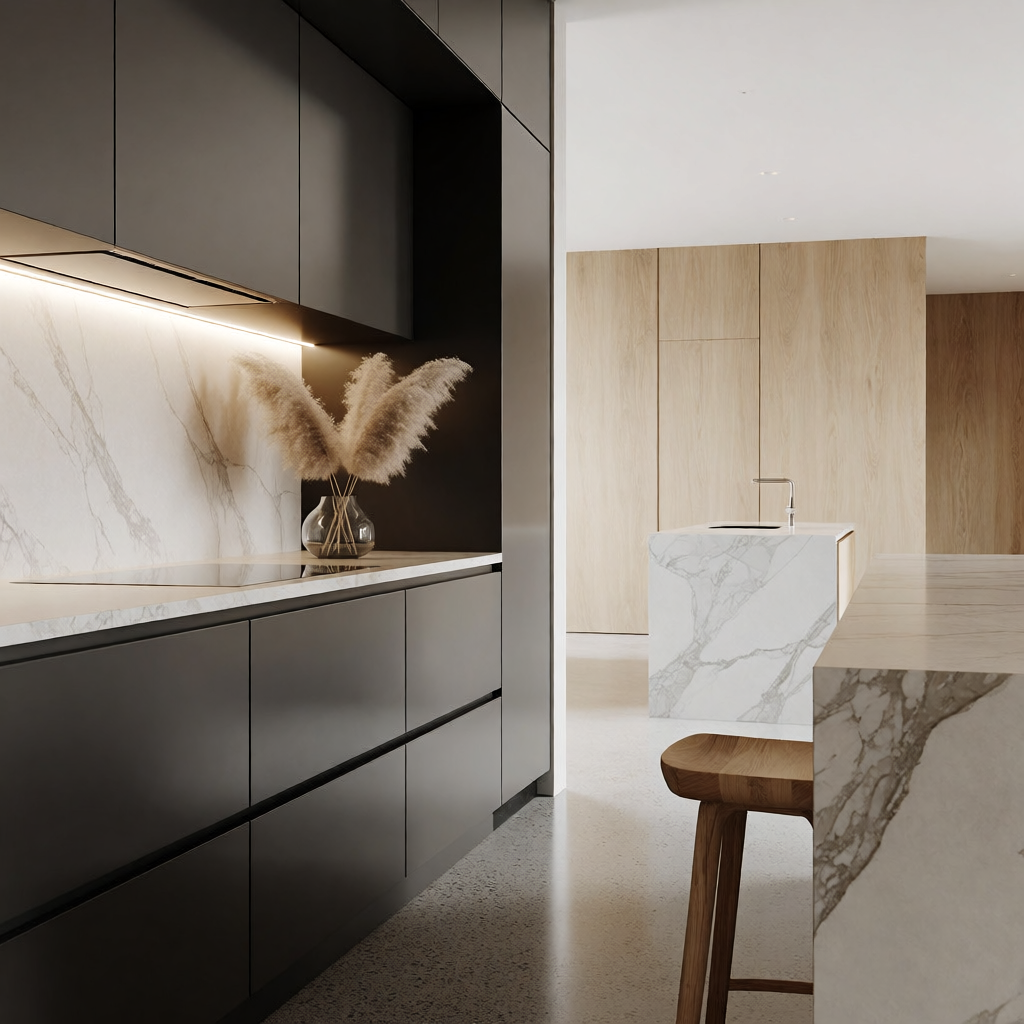
Low-profile countertops with clean, square edges harmonize exceptionally well with modern kitchen cabinets. Popular pairings include thin-profile quartz, honed waterfall-edge marble islands, brushed stainless steel, and solid porcelain slabs featuring subtle, integrated veining.
Visual Harmony and Contemporary Architectural Integration
Modern kitchen cabinets do far more than store kitchenware—they define the architectural language of the contemporary home. By prioritizing clean geometry, precise frameless engineering, advanced tactile materials, and ergonomic interior mechanics, these installations merge functional storage with minimalist beauty. Choosing the right combination of core materials, surface finishes, and hardware configurations creates a serene, highly efficient culinary space that remains timeless, practical, and enduring.
Read more:https://articlebytes.co.uk/houzz/