


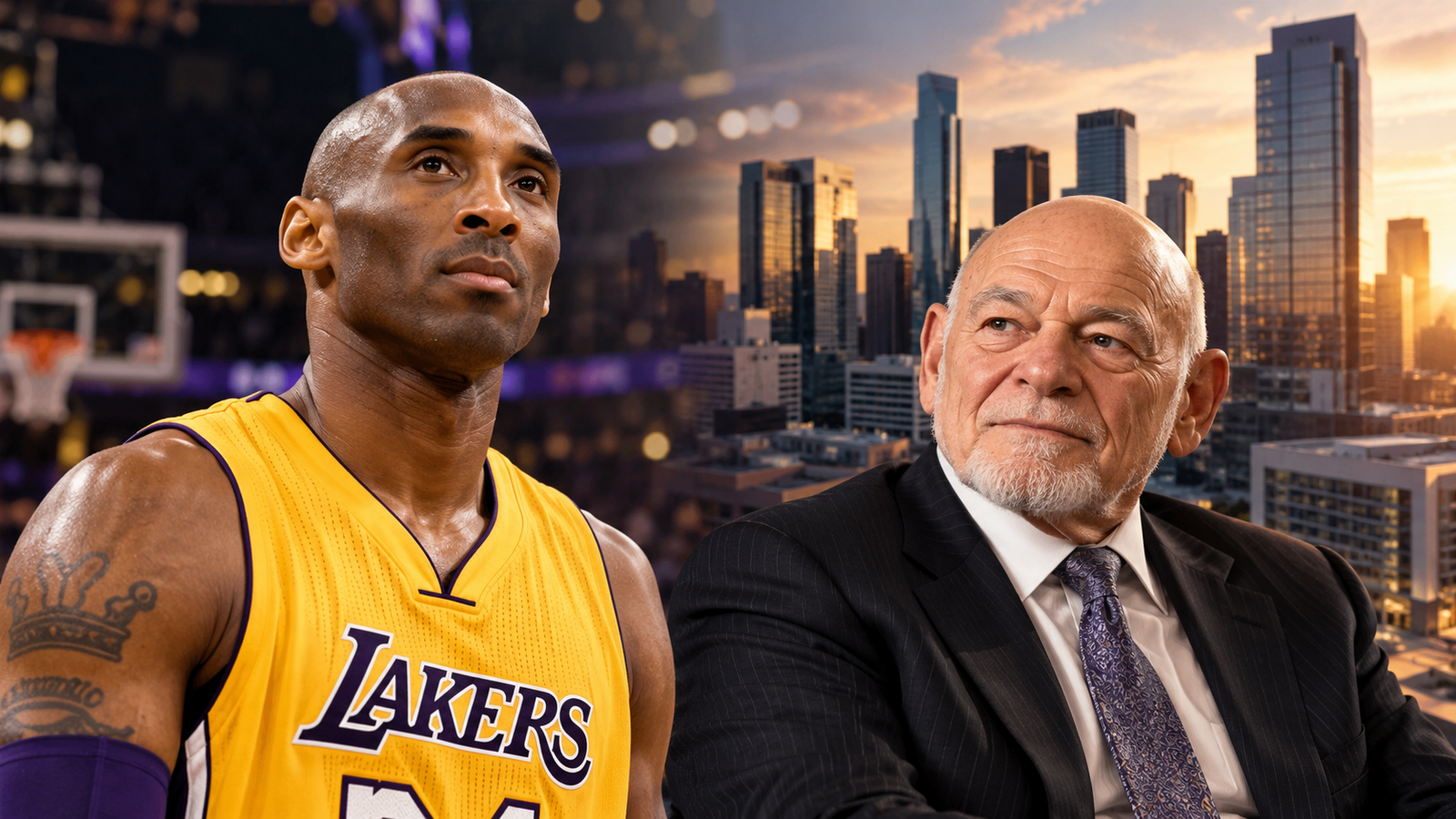
Kobe Bryant and Sam Zell: Biography, Careers, and the Story Behind Their Connection
The story of kobe bryant and sam zell brings together two influential figures whose careers developed in very different arenas. Kobe Bryant became one of basketball’s most celebrated players, earning worldwide recognition through extraordinary performances, five NBA championships, and a reputation for relentless preparation. Sam Zell, meanwhile, established himself as a prominent American entrepreneur and real estate investor, building a business empire through calculated risks, unconventional thinking, and a willingness to invest in opportunities others overlooked.
At first glance, the connection between an internationally recognized basketball legend and a powerful real estate investor may appear unusual. Bryant spent much of his professional life competing on basketball courts, while Zell concentrated on property markets, corporate acquisitions, and business transformation. Nevertheless, both men became influential figures in discussions about ambition, leadership, personal discipline, and the pursuit of excellence.
Their names also intersected in the broader world of business and leadership events, including the 2016 SALT Conference, which brought together participants from finance, entrepreneurship, entertainment, and other fields. This shared setting provides useful context for understanding why people search for kobe bryant and sam zell together.
However, it is important to distinguish a documented professional intersection from a personal or commercial partnership. Their appearance in the same broader professional environment does not, by itself, establish that they maintained a close friendship, invested together, or operated a joint business venture.
This article explores their individual biographies, professional achievements, leadership philosophies, public legacies, and the significance of their intersection in conversations about success.
Biography Table of Kobe Bryant and Sam Zell
The following table summarizes essential biographical information about both individuals and highlights the differences between their careers.
| Biographical detail | Kobe Bryant | Sam Zell |
|---|---|---|
| Full name | Kobe Bean Bryant | Samuel Zell |
| Commonly known as | Kobe Bryant | Sam Zell |
| Date of birth | August 23, 1978 | September 28, 1941 |
| Place of birth | Philadelphia, Pennsylvania, United States | Chicago, Illinois, United States |
| Nationality | American | American |
| Primary profession | Professional basketball player, entrepreneur, and investor | Entrepreneur, investor, and real estate executive |
| Most recognized for | His career with the Los Angeles Lakers | His real estate investments and business acquisitions |
| Major organization | Los Angeles Lakers | Equity Group Investments |
| Major achievement | Five NBA championships and the 2008 NBA Most Valuable Player award | Building major real estate investment businesses and advancing the modern REIT model |
| Other notable distinction | Two Olympic gold medals and induction into the Basketball Hall of Fame | Leadership in publicly traded real estate investment trusts |
| Date of death | January 26, 2020 | May 18, 2023 |
| Age at death | 41 | 81 |
| Lasting legacy | Basketball excellence, mentorship, storytelling, and youth sports | Real estate investment, entrepreneurship, and corporate transformation |
Who Was Kobe Bryant?
Kobe Bryant was an American professional basketball player widely regarded as one of the greatest athletes in NBA history. His career with the Los Angeles Lakers lasted two decades, during which he became known for his scoring ability, defensive intensity, competitive determination, and remarkable performances in important games.
Born on August 23, 1978, in Philadelphia, Pennsylvania, Bryant grew up in a family with a strong connection to basketball. His father, Joe Bryant, was a professional basketball player who competed in the NBA and later played overseas. This background introduced Kobe to the sport at an early age.
A significant part of his childhood was spent in Italy, where his father continued his professional career. Living in a different country exposed Bryant to new cultures and allowed him to develop his basketball skills outside the traditional American high school environment.
After returning to the United States, Bryant attended Lower Merion High School in Pennsylvania. His performances attracted national attention, and he emerged as one of the most highly regarded high school basketball prospects in the country.
Rather than attending college, Bryant entered the 1996 NBA Draft directly from high school. The Charlotte Hornets selected him with the 13th overall pick before trading his rights to the Los Angeles Lakers. That transaction became one of the defining moments in the franchise’s modern history.
Kobe Bryant’s Rise to NBA Stardom
Bryant initially entered the NBA as a talented teenager who needed to adjust to the physical demands, tactical complexity, and intensity of professional basketball. His early seasons included limited playing time and a gradual development into a dependable contributor.
His progress accelerated as he gained experience and developed his partnership with Shaquille O’Neal. Together, the two players helped transform the Lakers into a championship-winning team at the beginning of the 2000s.
The Lakers won three consecutive NBA championships in 2000, 2001, and 2002. These victories established Bryant as a central figure in one of the most successful periods in the franchise’s history.
Bryant’s individual accomplishments expanded considerably during the following years. In January 2006, he scored 81 points against the Toronto Raptors, recording the second-highest single-game scoring total in NBA history. His scoring performances demonstrated an unusual combination of footwork, shooting range, balance, speed, and offensive creativity.
In 2008, he received the NBA Most Valuable Player award. He subsequently led the Lakers to championships in 2009 and 2010, earning NBA Finals Most Valuable Player honors in both seasons.
By the time he retired in 2016, Bryant had won five championships, earned 18 All-Star selections, and accumulated 33,643 regular-season points. He also won Olympic gold medals with the United States men’s national basketball team in 2008 and 2012.
His achievements earned him a posthumous place in the Naismith Memorial Basketball Hall of Fame in 2020.
The Mamba Mentality and Personal Discipline
One of the most enduring elements of Bryant’s reputation was the concept known as the Mamba Mentality. The term represented an approach to improvement centered on preparation, concentration, resilience, and a willingness to examine weaknesses rather than avoid them.
Bryant was known for studying opponents, refining individual skills, and maintaining demanding training routines. His approach emphasized that natural ability was only one part of elite performance. Preparation, repetition, accountability, and mental readiness also mattered.
This philosophy later influenced discussions about leadership beyond sports. Entrepreneurs, coaches, executives, and students have often referred to Bryant’s work ethic when describing the importance of deliberate practice and consistent improvement.
The comparison between kobe bryant and sam zell is particularly interesting in this respect. Although their professions differed substantially, both became associated with an intense commitment to their chosen fields. Bryant sought advantages through preparation and basketball intelligence, while Zell built his reputation by studying markets, recognizing opportunities, and making decisions under uncertainty.
Their experiences illustrate how discipline can take different forms depending on the environment in which a person operates.
Who Was Sam Zell?
Sam Zell was an American billionaire entrepreneur and investor whose career was closely associated with commercial real estate, corporate acquisitions, and business restructuring. He became one of the most recognizable figures in American real estate investment and was particularly influential in the development of publicly traded real estate investment trusts.
Born in Chicago on September 28, 1941, Zell was the son of Bernard and Rochelle Zielonka, Polish Jewish immigrants who escaped Europe during the Second World War. His family’s experience shaped his appreciation for economic security, opportunity, and the importance of making independent decisions.
Zell attended the University of Michigan, where he studied and developed an early interest in real estate. While still a student, he became involved in managing rental properties, gaining practical experience in an industry that would eventually define much of his professional life.
Rather than treating property management as a temporary student activity, Zell approached it as a business opportunity. He learned how rental income, property maintenance, financing, and operational decisions influenced the value of real estate investments.
He subsequently earned a law degree from the University of Michigan. His legal education complemented his business experience by helping him understand contracts, negotiations, corporate structures, and the complexities of transactions.
In 1968, Zell established Equity Group Investments, a private investment firm that became the principal vehicle for many of his business activities.
Sam Zell’s Real Estate Investment Career
Zell developed a reputation for identifying undervalued properties and businesses that other investors considered unattractive or difficult to manage. His investment philosophy involved examining the relationship between price, risk, operational potential, and future demand.
This approach earned him the nickname “the Grave Dancer,” reflecting his willingness to invest in distressed assets and troubled businesses. Rather than automatically avoiding uncertainty, he frequently investigated whether a struggling property or company could become valuable under different ownership or management.
His career expanded from residential properties into office buildings, manufactured-home communities, industrial businesses, healthcare, energy, travel, and other industries.
One of his most significant contributions was his role in popularizing the modern real estate investment trust, commonly known as a REIT. These companies allow investors to obtain exposure to income-producing real estate through publicly traded shares or other investment structures, subject to applicable legal requirements.
Through businesses including Equity Residential, Equity LifeStyle Properties, and Equity Office Properties, Zell helped establish major platforms for investing in different categories of real estate.
Equity Residential became a major apartment owner and operator. Equity LifeStyle Properties focused on manufactured-home communities, recreational vehicle resorts, and related properties. Equity Office Properties developed into one of the country’s largest office property owners before its sale to Blackstone in 2007.
These transactions demonstrated Zell’s ability to develop substantial real estate businesses and eventually realize value through strategic sales.
The Tribune Company Acquisition
One of the most controversial chapters in Zell’s career was his acquisition of the Tribune Company in 2007. The company owned important American media properties, including the Chicago Tribune and the Los Angeles Times, along with television stations and other assets.
Zell pursued the transaction through a leveraged buyout structure involving substantial debt. The strategy was intended to transfer ownership and create opportunities to improve the company’s business performance.
However, the acquisition occurred during a period of major disruption in the newspaper industry. Advertising revenue was under pressure, digital media was changing how audiences consumed news, and traditional publishers were struggling to adapt their operating models.
The Tribune Company filed for bankruptcy protection in December 2008. Its financial difficulties became one of the most prominent setbacks associated with Zell’s investment career.
The episode offers a more complicated picture of his business philosophy. His willingness to accept risk helped him identify opportunities in distressed markets, but the Tribune transaction demonstrated that financial leverage and industry-wide changes can overwhelm even an ambitious turnaround strategy.
Understanding this aspect of his biography is important when examining kobe bryant and sam zell as examples of achievement. Neither professional excellence nor previous success eliminates the possibility of failure. Their careers instead demonstrate how outcomes depend on the decisions, circumstances, and constraints surrounding each individual challenge.
Why Are Kobe Bryant and Sam Zell Associated With Each Other?
The central question behind the search phrase kobe bryant and sam zell is how a basketball superstar and a real estate investor became connected in public discussions.
The clearest documented point of intersection is their association with the 2016 SALT Conference, a gathering known for bringing together influential participants from finance, investment, entrepreneurship, politics, and popular culture.
The event’s broader environment created opportunities for people from different industries to discuss leadership, performance, business strategy, and the forces shaping their respective fields.
Bryant had retired from professional basketball in April 2016, following a celebrated final game in which he scored 60 points against the Utah Jazz. During his transition away from the NBA, he increasingly explored business, storytelling, creative projects, and investment opportunities.
Zell, by contrast, had already spent decades developing companies, investing in real estate, and participating in major corporate transactions. His experience offered a different perspective on decision-making, financial risk, and long-term business development.
Their presence in the same conference setting is a credible reason for their names to appear together. However, this intersection should not be exaggerated into a claim that they were close associates or business partners.
Publicly available biographical and corporate records establish their individual achievements and the broader professional context in which they operated. They do not, on their own, establish a substantial joint venture between the two men.
Consequently, the most responsible way to approach kobe bryant and sam zell is to separate the documented conference connection from speculation about a deeper relationship.
Did Kobe Bryant and Sam Zell Have a Business Partnership?
There is no widely established public record of a major joint business venture between Bryant and Zell. Neither man’s best-known professional legacy depends on a partnership with the other.
Bryant developed his own post-basketball business interests, including investments, media projects, and the storytelling company Granity Studios. Zell built and managed businesses through Equity Group Investments and his involvement with various real estate companies.
Their professional interests could be discussed within the same business environment without necessarily overlapping through shared ownership or direct collaboration.
This distinction matters because online searches can bring together two famous people simply because they attended the same event, appeared in the same discussion, or were associated with a common professional network.
For readers researching kobe bryant and sam zell, the key takeaway is that a shared professional setting is not equivalent to a documented personal relationship or commercial partnership.
Did They Share Similar Leadership Principles?
Although Bryant and Zell worked in very different industries, aspects of their professional outlook can be compared.
Bryant emphasized preparation, skill development, competitiveness, and the determination to improve. His career showed how sustained practice and the ability to perform under pressure could contribute to exceptional results in elite sports.
Zell emphasized independent judgment, risk assessment, commercial opportunity, and a willingness to challenge established assumptions. His investment career demonstrated the potential rewards and consequences of making decisions in uncertain markets.
Both men were associated with demanding professional standards, but their methods reflected the different requirements of their occupations.
A basketball player must respond to opponents, teammates, coaching decisions, physical limitations, and rapidly changing game situations. An investor must evaluate asset values, financing arrangements, market cycles, business operations, and the possibility of economic disruption.
The meaningful comparison is not that their careers were identical. It is that both required informed judgment, consistent effort, and the capacity to make consequential decisions under pressure.
Kobe Bryant’s Life Beyond Basketball
Bryant’s influence expanded beyond the NBA during the later stages of his playing career and after his retirement.
He established himself as a businessman and creative professional, exploring opportunities in sports, media, education, and entertainment. His company, Granity Studios, focused on storytelling and projects intended to communicate ideas about sports, personal development, and perseverance.
In 2018, Bryant won an Academy Award for Best Animated Short Film as a producer and writer associated with Dear Basketball, a project inspired by his farewell letter to the sport.
The achievement demonstrated that his interests extended beyond competition. He was interested in communicating experiences, developing narratives, and exploring how stories could influence younger audiences.
Bryant also invested time in youth basketball and supported the development of young athletes. His relationship with his daughter Gianna was closely associated with his continued interest in the game and his enthusiasm for helping the next generation.
On January 26, 2020, Bryant, Gianna, and seven other people died in a helicopter crash in California. His death at age 41 prompted tributes from athletes, public figures, organizations, and fans across the world.
His legacy continues through his basketball achievements, creative work, charitable activities, and the influence of his approach to preparation and personal responsibility.
Sam Zell’s Life Beyond Real Estate
Although real estate was central to Zell’s career, his interests extended into a wide range of industries. He invested in companies involved in manufacturing, energy, healthcare, transportation, travel, and other commercial sectors.
His approach frequently involved studying businesses that faced difficult circumstances, identifying the sources of their problems, and determining whether changes in management, operations, financing, or ownership could improve their prospects.
Zell was also associated with entrepreneurial education and philanthropy. The University of Pennsylvania’s Wharton School recognized his contributions through the Samuel Zell and Robert Lurie Real Estate Center, an institution dedicated to real estate research and education.
His involvement in educational initiatives reflected an interest in developing knowledge and practical understanding of the investment industry.
Zell died on May 18, 2023, at the age of 81. His passing marked the end of a career that had influenced American commercial real estate and generated substantial discussion about the relationship between risk, opportunity, and business strategy.
His legacy remains complex. His achievements in real estate investment were considerable, while the Tribune Company bankruptcy illustrated the dangers of leverage and the difficulty of adapting traditional media businesses to structural change.
That combination of success and controversy makes his biography particularly relevant to readers interested in entrepreneurship and corporate leadership.
What Their Careers Reveal About Success
The comparison between kobe bryant and sam zell provides an opportunity to examine success without reducing it to wealth, fame, championships, or public recognition.
Bryant’s achievements were visible on the basketball court. His performances could be evaluated through points, assists, defensive contributions, championships, and individual awards. The competitive nature of professional sports provided relatively clear measures of performance, even though leadership and influence cannot be captured entirely by statistics.
Zell’s achievements were measured differently. His career involved evaluating assets, building companies, negotiating transactions, managing capital, and making decisions with uncertain outcomes. The success of a real estate investment could depend on economic conditions, financing costs, property demand, management quality, and the timing of a sale.
These differences show that excellence is shaped by the environment in which it is pursued.
Bryant’s career suggests the value of preparation, adaptability, and technical mastery. Zell’s career highlights the importance of market knowledge, financial judgment, and a willingness to question conventional assumptions.
Both biographies also illustrate that success is not a permanent condition. Athletes face injuries, age, and the eventual end of their competitive careers. Investors encounter recessions, changing consumer behavior, financing challenges, and unsuccessful transactions.
A realistic account of kobe bryant and sam zell must therefore include both achievement and limitation. Their professional lives were remarkable, but neither was free from setbacks or circumstances beyond individual control.
The lessons from their careers are most useful when considered in context rather than treated as universal formulas for success.
Public Recognition and Lasting Influence
Bryant’s influence remains particularly visible in basketball. His playing style, competitive reputation, and achievements continue to shape conversations about the greatest players in NBA history. His induction into the Basketball Hall of Fame formalized his standing among the sport’s most accomplished figures.
Zell’s influence is more closely associated with investment structures, commercial real estate, and the development of large-scale property businesses. The REIT model he helped popularize remains an important part of the modern investment landscape.
Their legacies reach different audiences. Bryant is remembered by basketball fans, aspiring athletes, coaches, and people interested in creative entrepreneurship. Zell is studied by investors, business students, property professionals, and observers of corporate acquisitions.
Yet both biographies offer material for broader discussions about ambition, professional identity, and decision-making.
The enduring interest in kobe bryant and sam zell reflects the way readers sometimes compare influential people from unrelated fields. Such comparisons can be valuable when they clarify differences, establish the limits of documented connections, and identify meaningful similarities without inventing a shared history.
Understanding Their Separate Legacies
Kobe Bryant and Sam Zell occupied different positions in American public life. One became a global sports icon whose accomplishments were celebrated in arenas around the world. The other became a major investor whose influence was expressed through property portfolios, corporate structures, and business transactions.
Their connection is best understood through the intersection of their public careers and their appearance in a wider professional environment, rather than through an assumed personal partnership.
For Bryant, the defining themes were athletic excellence, preparation, creativity, and the lasting emotional power of sport. For Zell, they were entrepreneurship, investment judgment, corporate transformation, and the complicated consequences of financial risk.
Examining these biographies together helps explain why people search for kobe bryant and sam zell, while also showing why accuracy matters when describing relationships between prominent individuals.
Their careers remain distinct, but both offer useful perspectives on how talent, experience, judgment, and persistence can shape a public legacy.
Frequently Asked Questions
1. Who were Kobe Bryant and Sam Zell?
Kobe Bryant was an American professional basketball player who spent his entire NBA career with the Los Angeles Lakers. Sam Zell was an American entrepreneur and investor best known for his real estate businesses and role in popularizing modern real estate investment trusts.
2. What was the connection between Kobe Bryant and Sam Zell?
Their names are associated in part because both were listed in connection with the 2016 SALT Conference. This professional intersection does not establish that they were close friends or business partners.
3. Did Kobe Bryant and Sam Zell work together?
There is no widely established public record of a major joint business venture between the two men. Their professional careers developed independently in basketball, media and entrepreneurship for Bryant, and real estate investment and corporate acquisitions for Zell.
4. What was Kobe Bryant famous for?
Bryant was famous for his 20-year career with the Los Angeles Lakers, five NBA championships, 18 All-Star selections, the 2008 NBA MVP award, and his extraordinary scoring performances.
5. What was Sam Zell famous for?
Zell was known for building major real estate investment businesses, investing in undervalued assets, and helping popularize the modern REIT structure. He also attracted attention for his acquisition of the Tribune Company.
6. When did Kobe Bryant die?
Kobe Bryant died on January 26, 2020, at age 41, in a helicopter crash in California. His daughter Gianna and seven other people also died in the accident.
7. When did Sam Zell die?
Sam Zell died on May 18, 2023, at age 81, following complications from an illness.
8. What is the Mamba Mentality?
The Mamba Mentality is associated with Bryant’s philosophy of preparation, continuous improvement, concentration, and resilience. It became a widely recognized expression of his approach to basketball and personal development.
9. What is Sam Zell’s contribution to real estate?
Zell helped develop large real estate investment businesses and popularize the modern REIT model. These structures allow investors to participate in income-producing property markets through investment vehicles designed for that purpose.
10. Why are people interested in Kobe Bryant and Sam Zell together?
The search reflects curiosity about how two influential people from different industries intersected. Their association with the same broader conference environment provides context, while their individual careers offer separate perspectives on leadership and professional achievement.
11. Did Kobe Bryant become an entrepreneur after basketball?
Yes. Bryant pursued business investments, creative storytelling, and media projects. His company Granity Studios developed projects connecting sports, education, and storytelling, and he received an Academy Award for Dear Basketball.
12. What can readers learn from their careers?
Their careers illustrate different approaches to professional excellence. Bryant’s story emphasizes preparation, skill, and adaptability, while Zell’s highlights opportunity recognition, commercial judgment, and the importance of understanding financial risk.
13. Were Kobe Bryant and Sam Zell the same age?
No. Bryant was born in 1978, while Zell was born in 1941. Zell was approximately 37 years older than Bryant.
14. What is the main difference between their professional legacies?
Bryant’s legacy is rooted primarily in basketball, sports culture, and creative entrepreneurship. Zell’s legacy is rooted in real estate investment, business ownership, and corporate transactions.
15. Is there evidence that they were close personal friends?
Their appearance in the same broader professional setting is not sufficient evidence of a close friendship. Claims about a personal relationship should be supported by reliable documentation rather than inferred from their public prominence.
Further Perspective: Two Careers, Two Definitions of Achievement
The biographies of Kobe Bryant and Sam Zell demonstrate that professional influence can emerge through very different routes. Bryant transformed extraordinary athletic ability into a historic basketball career, then pursued creative and entrepreneurial work beyond the court. Zell built a reputation by identifying commercial opportunities, developing investment platforms, and navigating complex corporate transactions.
The significance of kobe bryant and sam zell lies less in an alleged partnership than in the opportunity to examine their distinct experiences side by side. Their careers reveal different ways of approaching competition, uncertainty, preparation, and responsibility.
For readers interested in biography, sports history, entrepreneurship, and leadership, these two lives offer a reminder that public success is rarely a simple story. It develops through a combination of personal decisions, professional environments, opportunity, discipline, and circumstances that no individual can entirely control.