

Teach Me First Manga: Story, Characters, Format, and Reading Guide
The world of digital comics has expanded far beyond traditional printed manga, introducing readers to a diverse range of illustrated stories, serialized romances, and character-driven dramas. Among the titles attracting online search interest is teach me first manga, a phrase readers use when looking for information about the series commonly identified as Teach Me First! This title is associated with Korean digital comics, making the distinction between manga, manhwa, and webtoons an important part of understanding the series.
For readers discovering it for the first time, several questions naturally arise. What is the story about? Which characters shape its narrative? How is the comic presented? What should readers know about its genre, audience, and publication format? Understanding these details can make it easier to decide whether the series suits individual reading preferences.
This guide explores teach me first manga through its reported background, central premise, character dynamics, visual presentation, storytelling approach, and wider place in digital comic culture. It also explains how to evaluate reading platforms, understand content classifications, and distinguish confirmed information from details that may vary between online sources.
What Is Teach Me First Manga?
Teach Me First is a title associated with a Korean manhwa presented in a digital webtoon format. Although many English-speaking readers search for it as teach me first manga, the term manhwa is more precise when referring to Korean comics. Manga traditionally describes Japanese comics, whereas manhwa refers to comics originating in Korea. Webtoon, meanwhile, describes a digital comic format commonly designed for vertical scrolling.
These distinctions are useful because readers often encounter different terminology when searching for the same title. A website may use the word manga because it is familiar to a broad international audience, while another may describe the work as a manhwa or webtoon. Understanding the terminology helps readers identify the format without assuming that every label represents a separate series.
The title is generally associated with romantic drama and mature storytelling rather than a conventional action-adventure manga. Its reported premise centers on a homecoming, changing relationships, and tensions that develop when familiar characters meet again after a period of separation. These elements place the work within a category of digital comics that emphasizes interpersonal conflict and emotional complications.
Readers should also distinguish the original comic from unofficial summaries, fan discussions, promotional pages, and unrelated titles with similar names. Search results do not always provide equally reliable information, so details about creators, episode counts, publication dates, and availability should be checked against the publisher’s own listing whenever possible.
Teach Me First Manga: Biography and Quick Facts
The following reference table brings together the principal identifying details commonly associated with the series. Because online descriptions are not always consistent, information that requires further primary-source verification is identified accordingly.
| Detail | Information |
|---|---|
| Title | Teach Me First! |
| Common search term | teach me first manga |
| Comic category | Korean manhwa |
| Digital format | Webtoon-style comic |
| Main genres | Romance and drama |
| Story setting | A family farm and its surrounding environment |
| Central narrative element | A homecoming and changing personal relationships |
| Characters commonly identified | Andy, Mia, and Ember |
| Reported creators | Mischievous Moon and Pantsumania |
| Reported publishing platform | Honeytoon |
| Reported release status | Completed |
| Reported episode structure | Prologue and 20 numbered episodes |
| Intended audience | Adults, subject to the publisher’s age rating |
| Reading orientation | Vertical scrolling for the digital edition |
This table is a convenient starting point rather than a substitute for an official publication record. In particular, creator credits, episode availability, release information, and access conditions should be confirmed on the current publisher page before being treated as definitive.
The Story Behind Teach Me First
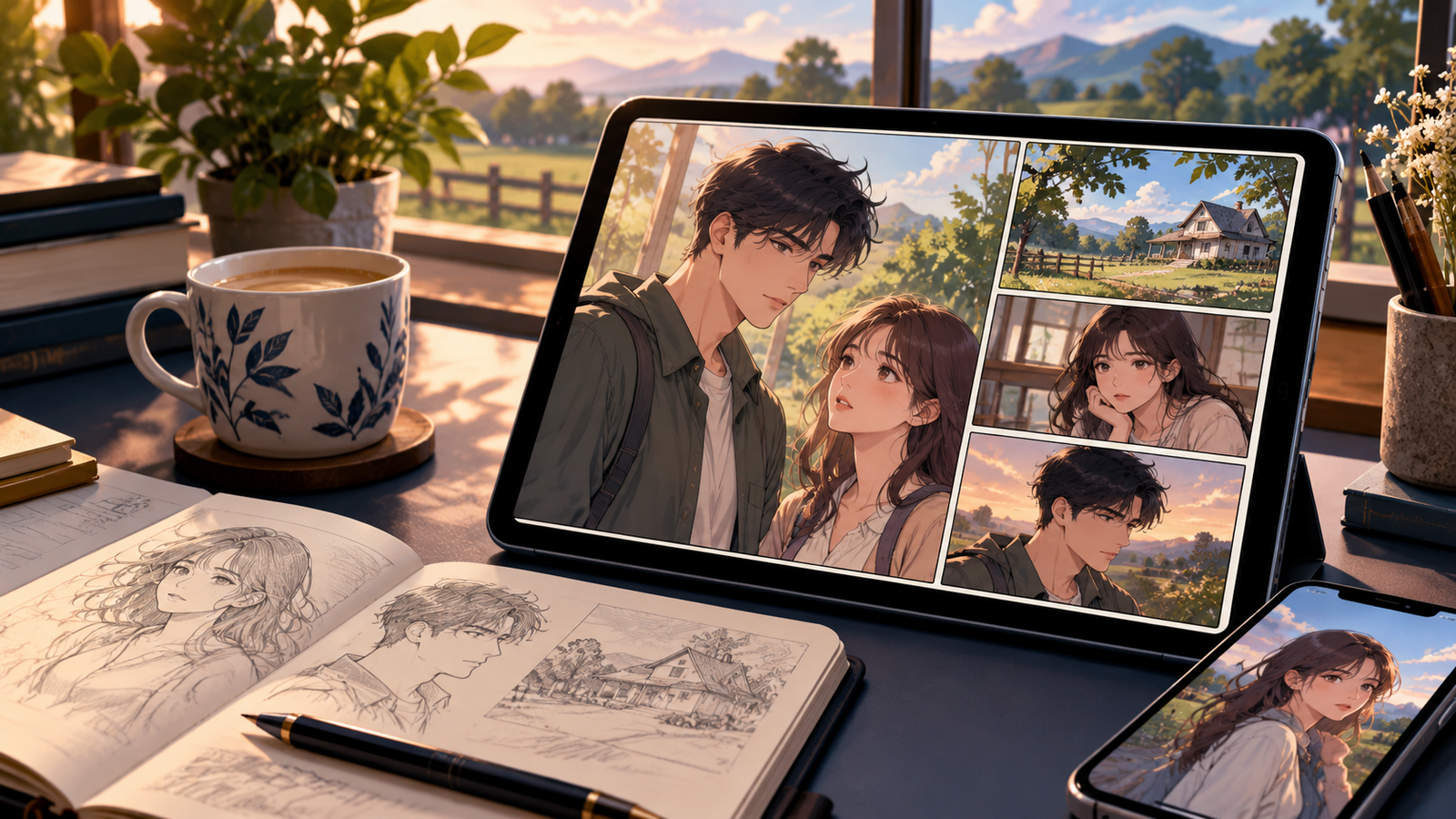
The reported storyline of teach me first manga begins with a return to a familiar home. Andy comes back to the family farm with his fiancée, Ember, after spending time away. The setting offers an apparent return to an earlier chapter of his life, but the reunion is complicated by the fact that the people and relationships he remembers are no longer exactly as they were.
One of the central figures is Mia, who has grown older during Andy’s absence. Their previous familiarity creates a complicated emotional backdrop for their reunion. Instead of presenting the past as something that can simply be resumed, the narrative explores how time changes people’s expectations, identities, and relationships.
Ember’s presence introduces another important dimension. As Andy’s fiancée, she occupies a different position within the household and provides a perspective shaped by her relationship with him. The resulting situation creates opportunities for uncertainty, strained communication, and conflicting expectations. The story’s dramatic framework depends on these interpersonal pressures rather than on an elaborate fantasy world or a large cast of unrelated characters.
Because the comic is associated with mature romantic drama, readers should not approach it as an all-ages romance. Its reported themes and relationship dynamics are intended for an adult audience. The premise can be discussed in terms of character development and narrative tension without confusing mature subject matter with a recommendation for every reader.
Main Characters and Their Roles
Andy: The Returning Protagonist
Andy occupies the central position in the reported narrative. His return to the family farm reconnects him with a past that has continued to change while he was away. The distance between his memories and his present circumstances gives the story a foundation for conflict.
A homecoming protagonist often enters a story believing that a familiar environment will provide stability. Yet the experience can reveal how much has changed in the meantime. In Andy’s case, the presence of his fiancée and his changed relationship with the people at the farm create competing personal responsibilities.
This role allows the narrative to examine the difference between remembering someone and understanding who that person has become. Andy’s perspective helps establish the story’s central tension, although a detailed assessment of his decisions requires reading the episodes in context rather than relying exclusively on short promotional descriptions.
Mia: A Character Defined by Change
Mia is important because her development during Andy’s absence challenges his assumptions about the past. When a character reappears after a long separation, the reunion can reveal a gap between remembered identity and present reality.
That contrast is a familiar storytelling device. One character may continue to associate another person with childhood memories, while the returning encounter introduces unfamiliar expectations and emotional complications. In a relationship-focused drama, such differences can drive the narrative forward even when the physical setting remains relatively unchanged.
Mia’s role is therefore closely connected to the theme of change. Her presence helps turn Andy’s return into a more complicated experience than a simple visit to his former home.
Ember: The Fiancée and an Outside Perspective
Ember accompanies Andy to the farm and brings another set of expectations into the household. Unlike characters whose histories are entirely rooted in the setting, she approaches it through her relationship with Andy.
Her position makes her significant to the story’s interpersonal structure. She is connected to the protagonist while also observing a family environment with its own history and established relationships. This difference in perspective can make ordinary conversations and social interactions more consequential.
A careful reading should consider Ember as a character within the dramatic situation, not merely as a device for creating conflict. Her role raises questions about trust, communication, expectations, and the responsibilities people have toward one another.
The Setting: Why the Family Farm Matters
The family farm provides more than a physical location. It connects the protagonist to his earlier life and creates a shared environment in which personal histories become difficult to ignore.
Settings in relationship dramas often influence how characters interact. A busy city can emphasize independence, anonymity, and competing ambitions. A family home, by contrast, can bring people into repeated contact and expose the habits, memories, and assumptions they carry into the present.
In teach me first manga, the farm setting supports the idea of returning to a place that appears familiar but no longer feels emotionally simple. The contrast between a stable physical environment and changing personal relationships gives the premise its underlying dramatic structure.
The setting also allows the narrative to use everyday situations as sources of tension. Family gatherings, conversations, shared routines, and moments of observation can become meaningful when characters have unresolved expectations. This approach is common in slice-of-life storytelling, where emotional significance often develops through ordinary experiences rather than spectacular events.
Manga, Manhwa, and Webtoon: Understanding the Difference
Readers searching for teach me first manga may encounter several descriptions of the same work. These terms are related, but they do not mean exactly the same thing.
What Does Manga Mean?
Manga is the established term for Japanese comics. Many traditional manga publications use black-and-white artwork and are arranged for right-to-left reading, although formats and presentation styles vary. Manga covers an enormous range of genres, including comedy, science fiction, romance, mystery, sports, and historical drama.
The word has become widely recognized internationally, so some readers use it informally for almost any Asian comic. This broad usage explains why a Korean digital series may attract searches that include the word manga.
What Does Manhwa Mean?
Manhwa refers to Korean comics. Modern manhwa is frequently published digitally and may feature full-color illustrations, mobile-friendly layouts, and serialized releases.
The term identifies the comic’s cultural and publishing tradition rather than a single artistic style. Korean comics can explore many of the same broad genres found in Japanese manga, but individual works differ in their visual design, narrative structure, and intended readership.
What Is a Webtoon?
A webtoon is a digital comic format strongly associated with vertical scrolling. Instead of requiring readers to turn through conventional printed pages, the artwork is arranged in a sequence that can be followed by scrolling down a screen.
This format is especially suitable for smartphones because readers can move through the story without repeatedly zooming or changing pages. Panel spacing, pauses, color, and the amount of blank space between scenes can also affect the rhythm of reading.
In the case of teach me first manga, the manhwa and webtoon descriptions are more precise than the traditional Japanese manga classification. The common search phrase remains useful for discoverability, but understanding the distinction helps readers identify the work’s format more accurately.
Artwork and Visual Storytelling
Digital comics communicate through both written dialogue and visual composition. Character expressions, posture, panel arrangement, lighting, and background details can convey information that a conversation alone might not express.
In a romance or relationship drama, the timing of a visual sequence can be particularly important. A pause between panels may create anticipation, while a change in facial expression can suggest uncertainty or discomfort. The reader’s attention is guided not only by what characters say but also by what the artwork leaves unspoken.
Vertical-scroll comics use screen space differently from printed manga. A creator can place a small panel after a large stretch of empty space to slow the pace, or use a series of closely arranged panels to create a faster sequence. These choices can make the reading experience feel continuous, even though the story is still constructed from individual images.
For readers exploring teach me first manga, the digital format is worth considering alongside the plot. Someone who enjoys color, expressive character art, and a mobile-first presentation may find the format convenient. A reader who strongly prefers printed volumes or traditional page layouts may have different expectations.
Specific judgments about the artwork, translation quality, and panel consistency are best made by examining an authorized edition rather than relying on cropped screenshots or promotional material.
Themes and Narrative Approach
Relationships and Changing Expectations
One of the principal themes associated with the story is the difficulty of adjusting to changed relationships. Time apart can alter how people see themselves and one another. Returning to a familiar place does not automatically restore the emotional conditions that existed before a departure.
This theme gives the narrative room to explore expectations that are no longer compatible with present circumstances. Characters may remember shared experiences differently, misunderstand one another’s intentions, or discover that a familiar relationship now requires a different kind of communication.
Emotional Conflict
Romantic drama frequently depends on the distance between what characters feel, what they believe they should do, and what they are prepared to admit. That distance can create uncertainty even when the basic situation is easy to understand.
The appeal of this kind of storytelling lies partly in watching characters navigate consequences. Choices affect multiple relationships, and a seemingly private decision can alter the atmosphere of an entire household.
Trust and Communication
Trust is not established by a single statement. It develops through consistency, honesty, boundaries, and the way people respond when expectations are challenged. Stories about complicated relationships can use misunderstandings and difficult conversations to reveal whether characters understand one another.
For readers evaluating teach me first manga, these themes offer a useful framework for thinking about the story beyond its genre label. However, interpreting a character’s motives should remain separate from endorsing every action the character takes.
Familiarity Versus Reality
The idea that a person can return to a familiar place and still feel like a stranger is common in fiction. Memories preserve a version of the past, but people continue to develop after those memories are formed.
This contrast can make a homecoming narrative emotionally effective. The physical environment may look unchanged, yet its meaning shifts as the characters encounter new circumstances. The story’s setting and interpersonal conflicts work together to explore that difference.
Episode Structure and Reading Order
Digital comics are often released in episodes, with each installment contributing to the larger story. Readers who begin in the middle may miss character introductions, earlier conflicts, or small details that become important later.
Online listings commonly describe Teach Me First as having a prologue followed by 20 numbered episodes. This reported structure should be verified against the current publisher’s catalog, especially if an edition has been reorganized or made available in a different region.
For a coherent reading experience, begin with the prologue when it is available and continue in the publisher’s numbered order. Early episodes generally establish the setting and relationships, while later installments develop the consequences of the initial situation. Reading sequentially makes it easier to understand shifts in character behavior and the context behind important conversations.
Readers should also distinguish between publication order and the order in which a website displays episodes. Some catalogs list the newest installment first, while others arrange chapters from the beginning. Checking episode numbers and titles can prevent accidental spoilers.
The completion status of a series is another detail worth verifying. A listing may indicate that the original run has ended, but translations, regional editions, or platform availability can follow different schedules. A completed story does not necessarily mean every edition is available in every country.
Who Is the Intended Audience?
Teach Me First is associated with mature romantic drama, so its intended audience is an important consideration. Readers should check the publisher’s current age classification and content notices before beginning the series.
A genre label such as romance does not automatically mean that a comic is suitable for children or teenagers. Romantic stories vary widely in their subject matter, and some include adult themes, complicated relationships, or material intended exclusively for mature audiences.
Readers who prefer lighthearted romance, uncomplicated relationships, or stories suitable for younger audiences may wish to select a different title. Those who choose to read mature fiction should do so with a clear understanding of the content classification and the boundaries of their own preferences.
The same principle applies when recommending comics to others. A useful recommendation identifies the general genre and audience rather than assuming that every romance reader will enjoy every romantic drama.
Reading Platforms, Availability, and Responsible Access
Finding a digital comic involves more than locating a page that displays its title. Readers should consider whether the source is authorized, whether the edition is complete, how the translation is handled, and whether access requires an account or payment.
Teach Me First is commonly associated with Honeytoon in online descriptions. Readers looking for the series should verify the current publisher listing rather than assume that every website using the title is an official distributor.
Authorized platforms may offer previews, paid episodes, subscriptions, or other access arrangements. The specific options can change over time, so it is sensible to check current terms before purchasing credits or starting a recurring membership. A free preview does not necessarily mean that the complete series is available without payment.
Unofficial copies can introduce practical problems, including missing panels, inconsistent translations, intrusive advertisements, misleading download prompts, and unclear age restrictions. Some websites also imitate legitimate reading services to collect personal information or encourage users to install questionable software.
A safer approach is to use a recognized publisher or authorized storefront, review its payment and privacy policies, and avoid sites that request unnecessary personal details. Readers should never provide payment credentials simply because a page promises unrestricted access.
For anyone researching teach me first manga, checking the source is just as important as confirming the title. Accurate episode information and a reliable reading experience are easier to obtain when the publication record can be traced to an authorized provider.
What Makes Teach Me First Interesting to Readers?
The interest surrounding teach me first manga can be understood through several features commonly associated with serialized digital romance. The combination of a familiar setting, a returning protagonist, evolving relationships, and emotional uncertainty gives readers multiple elements to consider as the story progresses.
First, the homecoming premise provides an accessible starting point. Readers can understand the basic situation without extensive explanations of a fictional universe or complicated background history. The dramatic questions emerge from the characters themselves, allowing the story to concentrate on personal decisions and their consequences.
Second, the webtoon format offers a convenient way to follow the narrative on a phone or tablet. Readers can move through the panels at their own pace, pausing when a scene requires closer attention. This flexibility has helped digital comics reach audiences who might not regularly purchase printed volumes.
Finally, the series occupies a mature romantic-drama category that has its own audience. Some readers enjoy stories that examine difficult emotions and imperfect decisions rather than presenting relationships as effortless or idealized. Whether those elements appeal to an individual reader depends on their tastes and comfort with the subject matter.
These characteristics help explain the title’s appeal without assuming that every reader will have the same reaction. A thoughtful review should consider the narrative, art, intended audience, and quality of the edition together.
Common Misunderstandings About the Series
Several misconceptions can arise when readers discover a title through search engines rather than a publisher’s catalog.
One misunderstanding is that the word manga necessarily identifies the comic’s country of origin. In everyday conversation, people sometimes use manga as a broad label for Asian illustrated fiction. However, manhwa is the more accurate term for Korean comics, while webtoon describes a digital format. These labels overlap in online searches, but they refer to different aspects of a publication.
Another misconception is that every website displaying a series is authorized to distribute it. A title appearing on multiple pages does not establish that those pages have permission to publish it. Readers should distinguish between official catalogs, editorial guides, fan discussions, and unauthorized copies.
A third misunderstanding concerns age suitability. Romance is a broad category, not an age rating. Mature romantic comics can contain subject matter that makes them unsuitable for younger audiences, even when their artwork resembles other mainstream digital comics.
Finally, information about episode totals and publication status should not be accepted without checking dates and editions. A page may describe an earlier release schedule or use information copied from another source. The publisher’s current catalog is the most useful reference for confirming the version available to readers.
Frequently Asked Questions About Teach Me First Manga
1. What is teach me first manga?
Teach Me First is a title associated with a Korean manhwa presented in a digital webtoon format. It is commonly described as a romantic drama involving a homecoming and complicated relationships. The phrase teach me first manga is widely used as a search term, although manhwa is the more precise classification.
2. Is Teach Me First a manga or a manhwa?
It is generally identified as a Korean manhwa. Manga traditionally refers to Japanese comics, while manhwa refers to Korean comics. Webtoon describes the digital format commonly associated with vertically scrolling episodes.
3. Who are the main characters?
The characters commonly associated with the series are Andy, Mia, and Ember. Andy returns to the family farm with his fiancée, Ember, and encounters Mia after a period of separation. Their different histories and expectations contribute to the central dramatic situation.
4. What is the story about?
The reported premise follows Andy’s return to his former home with Ember. The reunion brings him into contact with Mia, whose life has changed during his absence. The story explores complicated relationships, emotional uncertainty, and the consequences of changing expectations.
5. Is Teach Me First suitable for children?
The series is associated with mature romantic subject matter and should not be assumed suitable for children. Readers should check the publisher’s current age rating and content information before accessing it. Younger readers should choose comics intended for their age group.
6. How many episodes does Teach Me First have?
Online descriptions commonly report a prologue and 20 numbered episodes. Readers should verify the current publisher listing because catalogs, regional editions, and episode availability can change.
7. Is the series complete?
Some online listings describe Teach Me First as completed. For the most dependable status information, consult the publisher’s current catalog. The availability of a complete original run and the availability of every translated edition may differ.
8. Where can readers find Teach Me First?
The series is commonly associated with Honeytoon. Readers should search the platform’s official catalog to confirm the title, available editions, age requirements, and current access conditions. Avoid assuming that an unrelated website is an authorized source simply because it displays the same name.
9. Can teach me first manga be read on a smartphone?
The series is associated with a vertical-scroll digital comic format, which is convenient for smartphone reading. A compatible browser or official platform application may provide access, depending on the publisher’s current arrangements and regional availability.
10. Is Teach Me First available for free?
Free access depends on the current publisher’s policies and the specific edition. A platform may provide a preview or selected free episodes while charging for other installments. Check the official catalog for current pricing instead of relying on outdated offers or unverified claims.
11. Does the series have an anime adaptation?
The sources reviewed for this guide do not establish a verified anime adaptation. Readers interested in an animated version should look for an official announcement from the publisher or rights holder rather than relying on unofficial videos or misleading search results.
12. Why do readers search for teach me first manga instead of manhwa?
Manga is a familiar term for international readers and is frequently used as a general search phrase for illustrated Asian comics. Readers may also encounter inconsistent labels across fan discussions and editorial websites. The more precise classification for this title is Korean manhwa in a webtoon-style format.
13. What should readers know before starting the series?
Readers should understand the general genre, check the age classification, confirm the authorized publication source, and review the access conditions. Beginning with the prologue and following the numbered episodes in order can also make the character relationships easier to understand.
14. What does the title suggest about the story?
The title suggests a request for guidance or instruction, but a title alone cannot establish the full meaning of a story. Its significance should be interpreted through the characters’ conversations, circumstances, and development across the episodes.
15. Is Teach Me First suitable for readers who prefer light romance?
That depends on individual preferences. Readers seeking gentle, uncomplicated romance may find the mature themes and complicated relationships less suitable for their tastes. Reviewing the genre classification and content notices before starting is a sensible way to decide.
A Reader’s Checklist Before Opening the First Episode
Before beginning teach me first manga, take a moment to verify a few practical details:
- Confirm that the title matches the series you intend to read.
- Check the publisher’s name and whether the platform is authorized to distribute it.
- Review the age rating and content notices.
- Confirm the episode order and whether the prologue is available.
- Check the current cost of paid episodes or subscriptions.
- Review renewal and cancellation terms before starting a membership.
- Avoid suspicious download prompts, unofficial applications, and requests for unnecessary personal information.
These simple checks can prevent confusion and help readers make informed decisions about their time, money, and online safety.
The Wider Place of Digital Romance Comics
Digital romance comics form part of a broader transformation in how illustrated stories are created, distributed, and read. Mobile-friendly platforms allow creators to reach international audiences without relying exclusively on traditional print distribution. Readers can discover unfamiliar genres, follow serialized narratives, and explore stories from different cultural backgrounds.
The success of this format also makes accurate descriptions increasingly important. Readers benefit when editorial guides distinguish a title’s country of origin, format, genre, audience, and official publication status instead of treating these details as interchangeable.
For a title such as teach me first manga, understanding the difference between manga and manhwa is a useful starting point. Equally important is recognizing that mature fiction has a specific audience and that publication details should be checked against reliable sources.
Ultimately, the most useful reading guide does more than repeat a plot summary. It gives readers the context needed to understand a series, evaluate whether it suits their interests, and locate trustworthy information about its publication. With those foundations in place, readers can approach Teach Me First with clearer expectations and a better understanding of the digital-comic landscape.